
Running a fashion brand means you're always behind on content.
New designs are ready, but the shoot isn't scheduled. The shoot is scheduled, but the images take weeks to arrive. The images arrive, but half of them don't match the rest of the catalog.
This is the real efficiency problem in fashion photography—not the shoot itself, but everything around it that slows your business down.
AI doesn't simply make photography faster. It removes the bottleneck entirely.
The Actual Problem With Traditional Fashion Shoots
Many growing fashion brands absorb delays without treating photography as an operational problem.
But a traditional fashion shoot involves:
- Booking a studio
- Sourcing models
- Coordinating photographers
- Managing styling and makeup
- Shipping samples
- Editing and post-production
- Waiting for image delivery
For brands selling kurtas, sarees, accessories, ethnic wear, or rapidly changing collections, delays directly affect revenue.
Products often sit in inventory waiting for photography production to finish.
This is where AI fashion photography changes operations.
What Changes When You Switch to AI
The biggest gain isn't only reducing shoot costs.
It's removing the production dependency entirely.
You Stop Waiting to Launch
With AI fashion photography tools, brands upload garment photos and generate ecommerce-ready visuals quickly.
Products can launch the same week they're designed rather than waiting weeks for shoot availability.
Your Catalog Looks Consistent
Catalog consistency becomes easier because AI applies:
- Consistent lighting
- Consistent backgrounds
- Uniform styling
- Consistent model quality
Whether you have 5 products or 500 products.
You Remove Operational Dependency
No model cancellations.
No studio scheduling conflicts.
No delays during peak seasonal periods.
Your content workflow runs when your business needs it.
Specific Gains for Indian Ethnic Wear Brands
Indian ethnic wear requires category-specific presentation.
Sarees, lehengas, kurtas, anarkalis, and fusion wear follow visual patterns generic AI tools often struggle to reproduce correctly.
Presentation matters:
- Fabric drape
- Pallu placement
- Fit representation
- Traditional styling logic
AI systems trained specifically for Indian ethnic categories improve these outputs significantly.
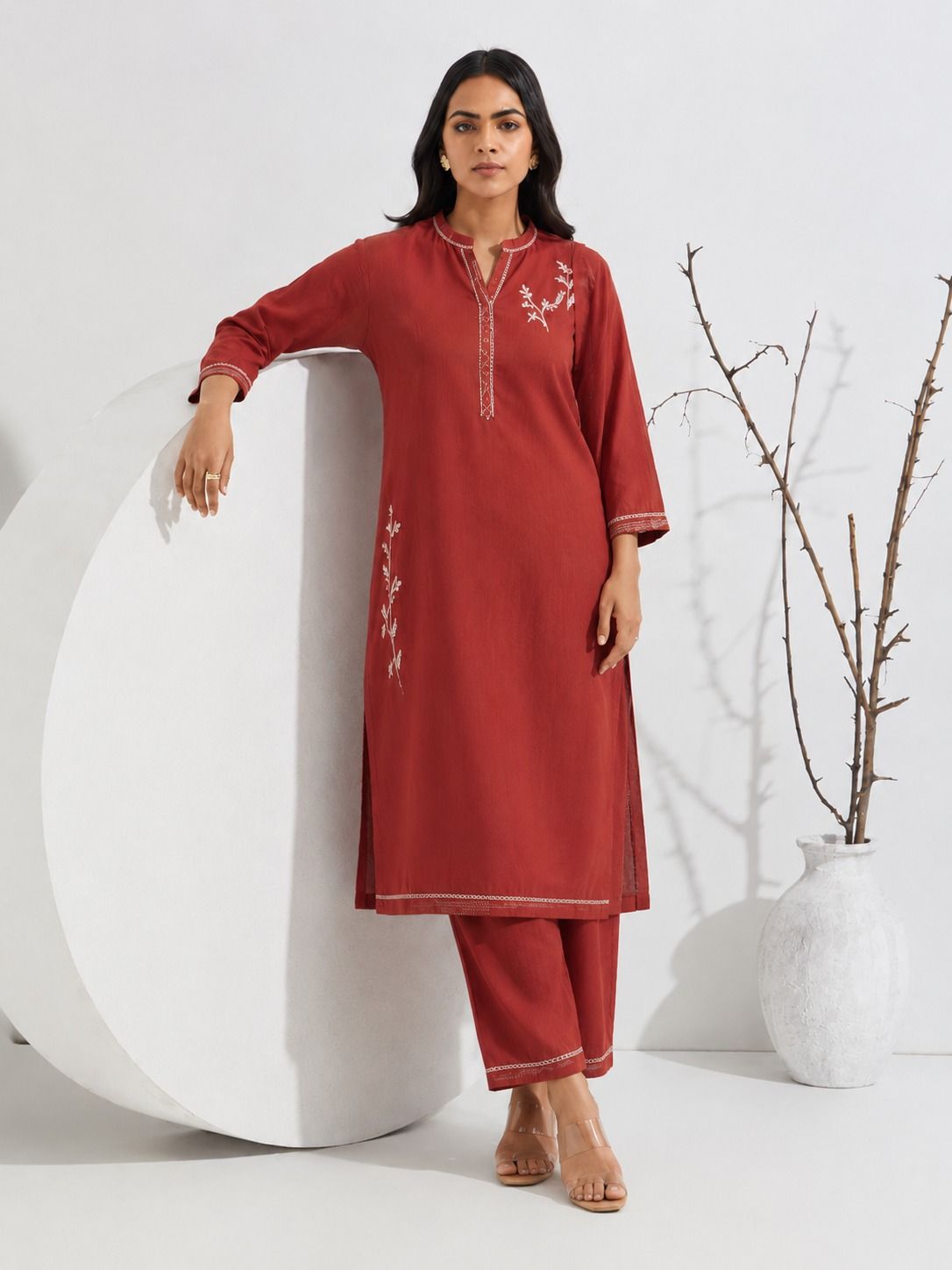
AI Kurta Product Photography
Flat-lay kurta images communicate print and color.
Model photography communicates:
- Fit
- Silhouette
- Length
- Fall of fabric
AI-generated model images help brands present every design properly without selecting only a few "hero products" for expensive shoots.
AI Saree Product Photography
A saree displayed flat communicates very little.
Customers need context:
- Drape behavior
- Blouse pairing
- Overall styling
- Movement and fabric flow
AI-generated model photography helps provide that context.
How to Create a Fashion Lookbook Without a Photoshoot
Traditional lookbooks require:
- Studios
- Models
- Styling teams
- Photography production
- Editing timelines
AI changes the workflow completely.
Step 1 - Upload Your Garment Image
A flat-lay image, mannequin photo, or hanger shot works well.
The cleaner the input, the stronger the final result.
Step 2 - Select Model and Background
Brands can configure:
- Model appearance
- Skin tone
- Background environment
- Output dimensions
Step 3 - Generate Final Images
AI-generated model photography produces platform-ready outputs suitable for:
- Ecommerce stores
- Catalog PDFs
- WhatsApp catalogs
- Advertising creatives
AI Background Replacement and Platform Formatting
Different platforms require different image specifications.
Examples:
- Amazon often prefers white backgrounds
- Marketplace listings require fixed aspect ratios
- Social media performs better with lifestyle visuals
AI background replacement allows brands to generate multiple formats from one upload:
- White ecommerce backgrounds
- Lifestyle scenes
- Neutral catalog presentation
- Social-first visual styles
Without creating separate photography workflows.
What AI Generated Clothing Model Images Actually Look Like
Most brands ask one question first:
Will it look real?
The answer depends heavily on the platform quality and source image.
Fashion-specific AI systems trained for garment categories generally produce significantly stronger outputs than general-purpose AI image tools.
Details that matter include:
- Fabric texture
- Embroidery accuracy
- Garment proportions
- Lighting consistency
- Natural model presentation
The Efficiency Gain in Real Terms
Before AI
40 new products → Photography scheduling → Shoot production → Editing queue → Final uploads live after weeks.
After AI
40 new products → Upload images → Generate outputs → Products live within days.
That operational compression changes:
- Launch timing
- Inventory movement
- Marketplace visibility
- Advertising speed
Who Benefits Most
D2C Fashion Brands
Brands launching products frequently benefit from faster content production.
Indian Ethnic Wear Sellers
Marketplace sellers using Myntra, Flipkart, Nykaa Fashion, or their own websites benefit from scalable model photography.
Fashion Exporters and Wholesalers
Catalog generation becomes significantly faster.
Large SKU Marketplace Sellers
Visual consistency becomes easier to maintain across hundreds or thousands of listings.
Frequently Asked Questions
Do I need a professional camera?
No. A smartphone image with decent lighting is usually enough.
Can AI handle ethnic wear properly?
Category-specific AI systems can reproduce ethnic wear styling significantly better than generic image tools.
Can I create different backgrounds from one upload?
Yes. AI background replacement allows multiple output variations from one product image.
Does AI preserve my actual garment?
Yes. Strong AI systems preserve product details while changing presentation environments.
Can AI generate videos too?
Many AI product photography platforms support short-form product video generation alongside images.
The Real Takeaway
Efficiency in fashion photography isn't only about speed.
It's about removing operational complexity.
AI photography reduces production overhead and helps brands move products to market faster while maintaining visual consistency.
When products launch faster, catalogs stay consistent, and visual production becomes scalable, businesses gain more time to focus on growth rather than logistics.
Try AIVX Studio free and generate AI fashion photography without studios, model coordination, or production delays.